My Kiwi wine journey 6) getting down to earth in Central Otago
My Kiwi wine journey draws to a close, in spectacular Central Otago, further down the South Island …
The world’s most southerly vineyards lie in carefully selected plots amidst the savage beauty of one of New Zealand’s most attractive landscapes. Central Otago is breathtaking, the air fresh with an Antarctic tingle even at the height of summer. The climate is semi-continental, with the stark diurnal range in temperature – hot, sunny days and cold, crisp nights – providing great conditions for bright, ripe and juicy wines.
This is pinot noir country: for many, the ‘Otago style’ defines the New World take on that wonderful grape. It’s also great a place to be at one with nature. If Marlborough gave me a taste for biodynamics, Central Otago promises a feast.
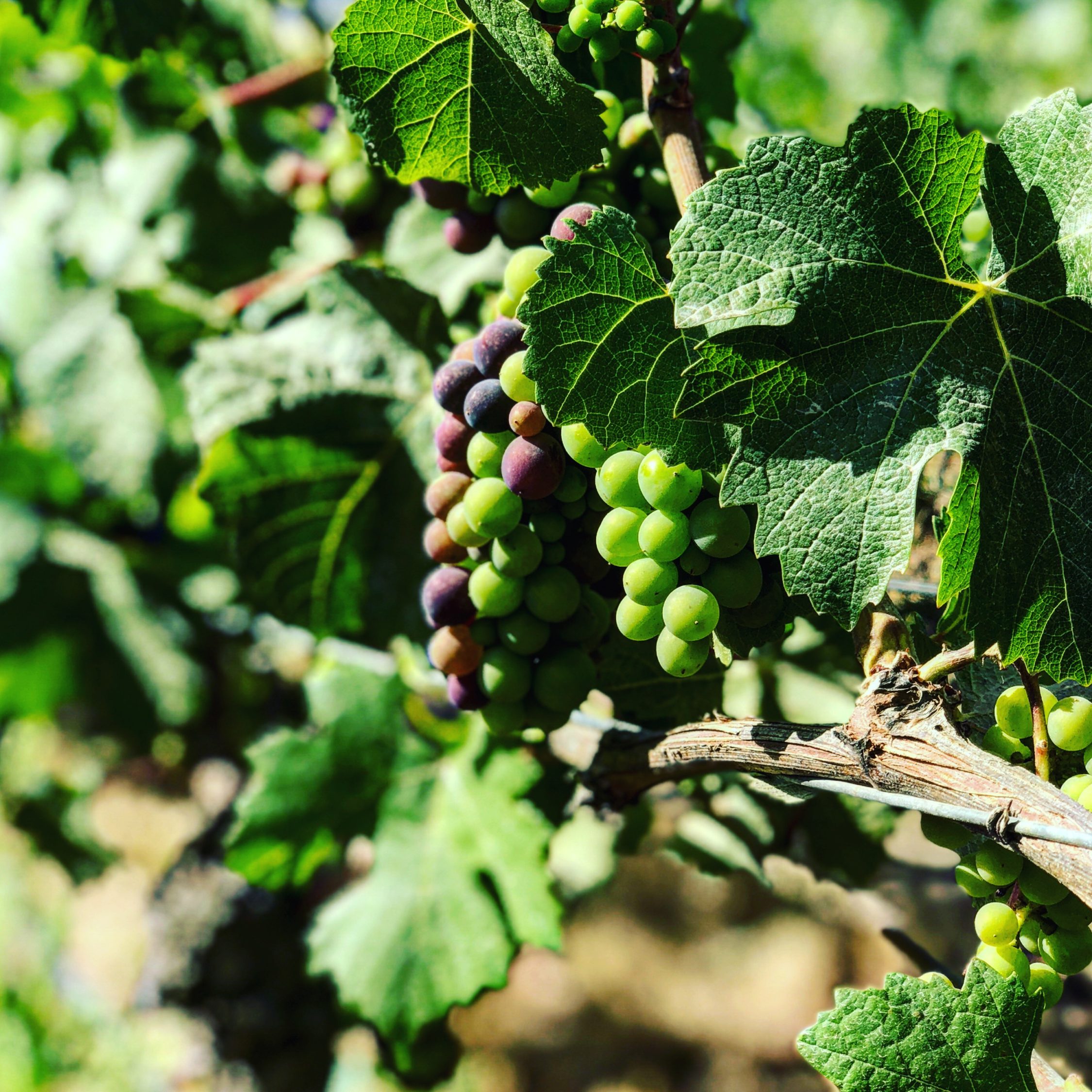
veraison has begun, the grapes are on the turn …
As I drive through the vines, towards the winery at Felton Road, I’m gripped by that wonderful vibrancy that comes from seeing healthy green growth in early summer (it’s something I associate with the English asparagus season back home). Here in Bannockburn, veraison has begun, the grapes are on the turn.
I’m shown around by winemaker Blair Walter, a veteran of Burgundy who has been here since the start, 25 years ago.
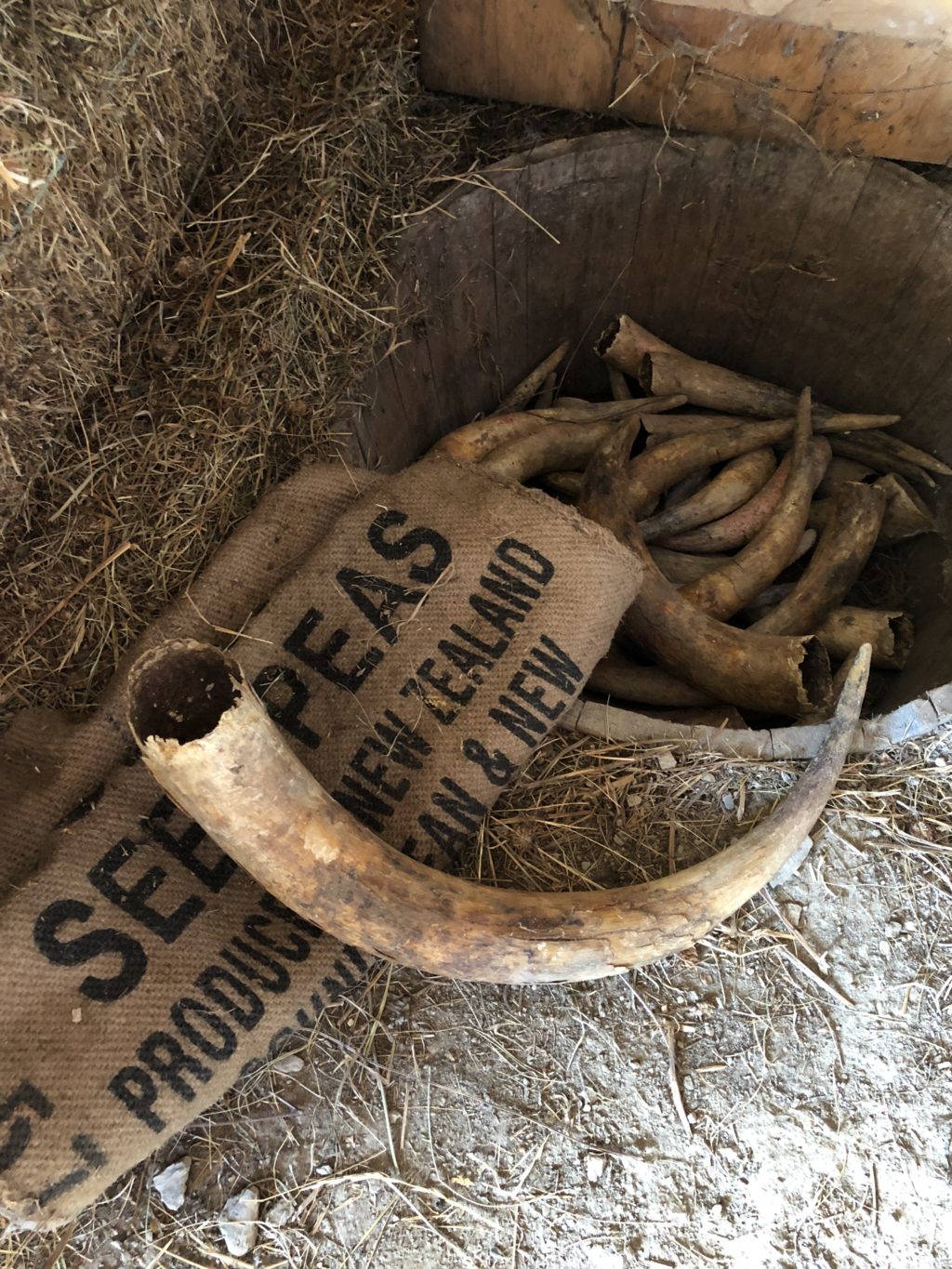
The beating biodynamic heart of Felton Road is the ‘voodoo lounge’, where well-rotted cow manure is prepared, to stuff the cow horns, huge stones are used to crush quartz for silica treatments, and small pots of green potion sit ready for application to the vines, using brushes made from bunches of thyme, during the calendar-specified phase of the moon.
If it all sounds like quackery then trust me, Blair is no hippy. He talks passionately about sustainability, which he defines as “the capacity to endure”, and its role “creating wines that truly speak of their place”. His winery is gravity-fuelled: in basic terms, grapes enter at the top and wine comes out of the bottom. This reduces the need for pumping, which obviously has energy benefits, but also supports the goal of low-intervention winemaking.
“when you talk about sustainability, you need to start with the bottle” …
Felton Road’s wines are premium – it has just become one of ‘the world’s most admired wine brands’ in the Drinks International Top 50 – but the bottles are made with thin glass. “Our bottle weight is 417 grammes”, Blair tells me, “when you talk about sustainability, you need to start with the bottle, which accounts for about 60% of the carbon cost”.
There are five pinots: four from individual sites – Cornish Point, Calvert, MacMuir and The Elms – and one blend of those four. Bannockburn is the blend, offering lifted rose petals and juicy red cherry, plums, silky tannins and gentle spice. Of the single plot wines, Calvert seems the most gentle, with a more earthy, matcha feel, while my favourite is Block 3, from the Elms vineyard, which has a real energy to it, offering generous tayberries, cedar and sweet spice, with beautiful balance and smooth chocca-mocca tannin structure.

Chardonnay represents only 3% of Central Otago’s plantings and Blair considers this “a missed opportunity”. Felton Road’s Bannockburn Chardonnay offers concentration but also restraint, with grapefruit, ripe peach, light pineapple and delicate use of oak, all contributing to a long finish. I also liked the very precise dry Riesling, with its sherbet lemon, lime and green apple character and cool, satisfying finish.
“if i’m in the red, I can’t be green” …
A dozen miles away, alongside Lake Dunston, an Austrian winemaker is making waves with sparkling wine.
Rudi Bauer first made a base wine for a sparkler in 1990, for a project at New Zealand’s Lincoln University, but he didn’t start making traditional method commercially until 1998.
On a hillside, close to the abandoned Gold Rush town of Bendigo, Rudi embraces organic and biodynamic (you need to be the former, to achieve the latter) and talks with an acquired Kiwi directness about sustainability: “if i’m in the red, I can’t be green”, he says, “your philosophy has to be sufficiently economically sound to be delivered”.
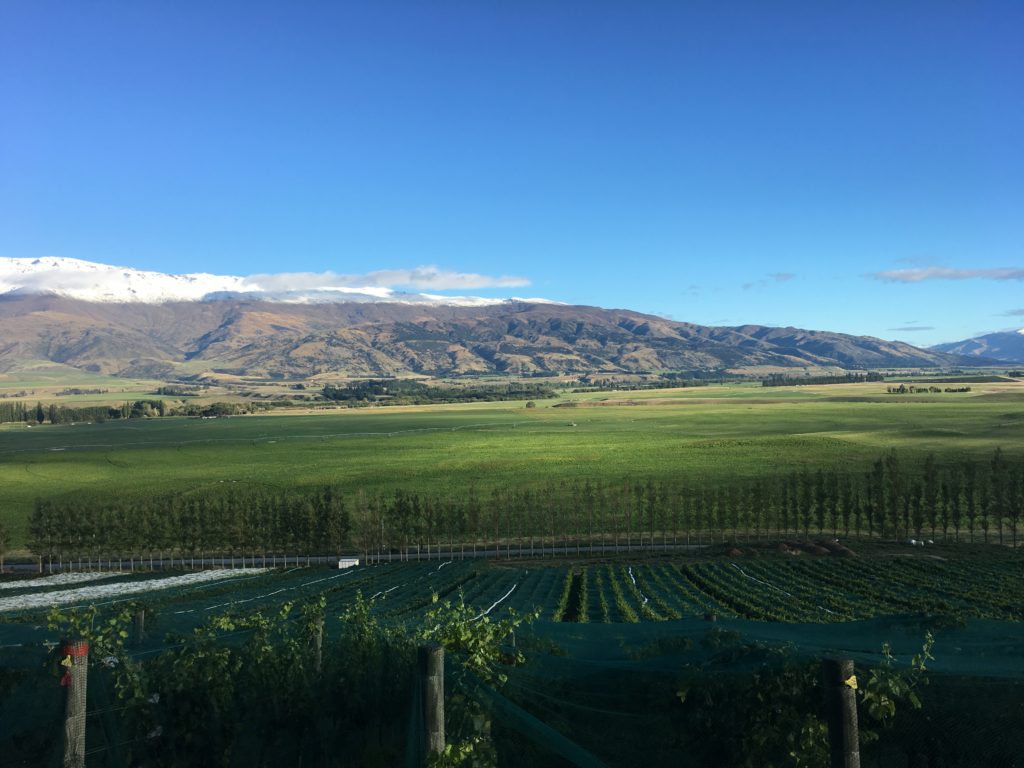
Rudi drives me a few hundred metres up, past redundant mine shafts, for the remotest tasting I’m ever likely to have: “I can bring you the wines wherever you are, but I can’t bring you the view”.
That view takes in the lake, the hills opposite, then distant snow-capped mountains, as we sample a range of strikingly cool, fresh, elegant wines, including chardonnay, pinot gris, a rosé from pinot noir and a red from the same grape.
Rudi is friendly, funny and has a modesty that belies the success he’s achieved with his life’s work: a sparkling wine that’s the pride of new world. A blend of majority pinot noir and chardonnay, Quartz Reef produces a seductive, carefully crafted, traditional method brut that wraps ripe peach, red apple and citrus blossom around a crumbly, nutty layer of biscuit, supported by an invigorating core of cool-climate acidity. It’s fresh, moreish and never remotely cloying.
Sparkling wine is one of the revelations of my trip and Central Otago is blowing me away with its bubbles.
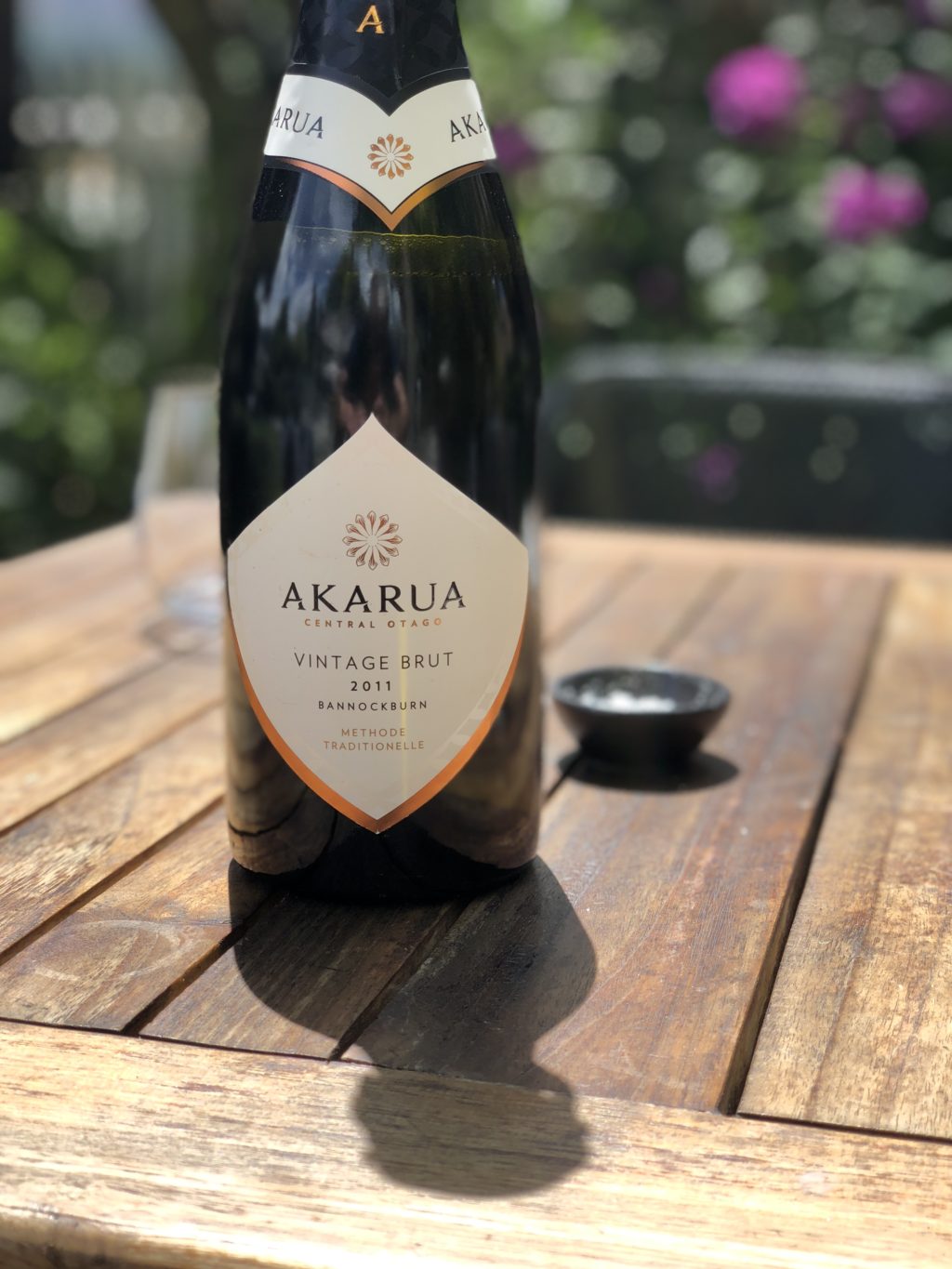
With 100 hectares, Akarua is one of the bigger names in Central Otago investing significantly in sparkling wine. Consultant Dr Tony Jordan, a veteran of Moet Hennessy and Chandon, oversees the Akarua Sparkling Brut and its pink twin, working with the winery team. He’s apparently a firm believer in sparkling wines that define their own identity, rather than simply trying to ape Champagne.
Just outside the historic tourist mecca of Arrowtown, Akarua has a cute cellar door cafe – a joint-venture with an artisanal food specialist – where I’m guided through the range by assistant winemaker Rosie Menzies. The Akarua Sparkling Brut is a great place to start: with its creamy mousse, inviting citrus, brioche nose and distinct honeycomb character, it’s crisp and refreshing. The rosé version features a 10% proportion of pinot noir fermented on its skins for colour, and offers elegant Japanese cherry blossom (very specific, I know, but it smells purer there), strawberries and red cherries, with a savoury twist. There’s a confident range of still wines too, from a very light organic, gooseberry leaf sauvignon, to a mineral-rich, zesty riesling, and a more substantial, creamy, stone fruit pinot gris. There’s also a tier of pinots, starting with the simple, crowd-pleasing, ‘Rua’, and culminating in the generous, classy, ‘Kolo’ single vineyard flagship, which has deep black cherry and ripe red plums, silky tannins and smoky spice.
They don’t believe in rushing things here …
Of all the wines I’ve tasted in this region, that ‘Otago style’ – deep, ripe, smooth and juicy – is best represented by Akitu, a producer that makes only two wines, and only started releasing them five years ago. Granted, the vines – all pinot noir – were planted in 2002, but it was a further decade before anything was released under the new brand. They don’t believe in rushing things here.
Akitu means ‘peak’ in Maori, a nod to the 380 metre altitude, and is a dream fulfilled for owner, Andrew Donaldson. He’s away, so right-hand man, viticulturalist Steve Blackmore, shows me around and offers me a vertical tasting of the wines, made by consultant winemaker PJ Charteris using only the pick of the crop, the remainder of the grapes being sold on for blends.
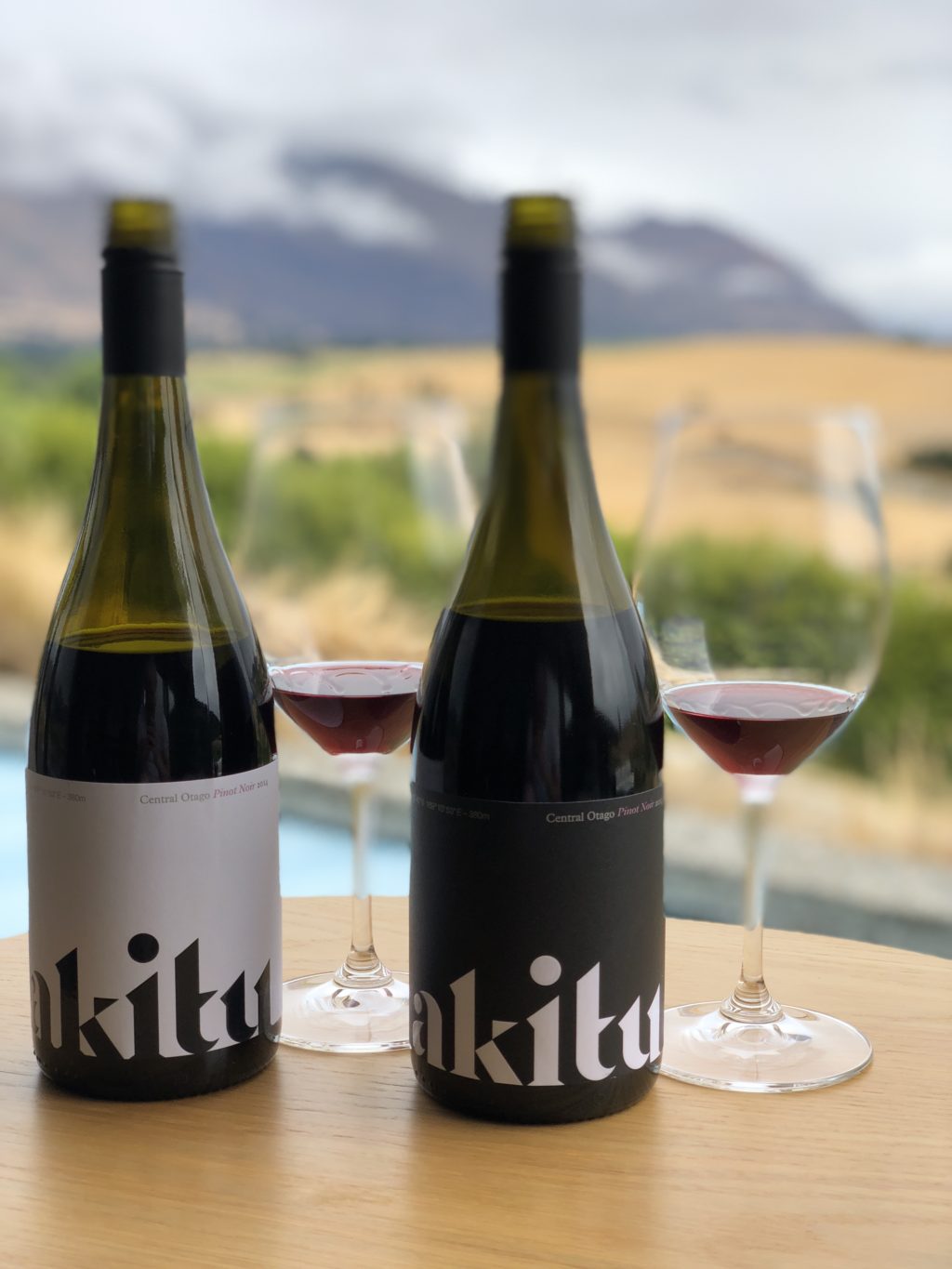
The wines are brilliantly branded, the standard range in white, with black for premium. They have striking ‘shelf appeal’, but you’re unlikely to find them there: 80% of Akitu’s 2,300 cases each year are exported to the UK, with the majority ending up on restaurant wine lists.
The black label wines have energy and concentration; we taste the recent ’16 vintage, from a hot summer, with deep, ripe black cherry and plum, liquorice and warm spice, with exquisite balance and surprisingly smooth tannins, for a young wine. This contrasts with the ’15, a cooler vintage, which boasts a more delicate, floral nose and savoury feel. My favourite is the ’14, when conditions were near perfect, with generous morello cherry and juicy plums, savoury mushroom and forest floor notes, and a waft of garrigue, all woven together with ripe tannins to create a silky, smooth, long and satisfying pinot noir.
a foot in both camps …
There appears to be a friendly rivalry between venerable old Burgundy and youthful upstart Central Otago and my final stop, Domaine Thomson, manages to have a foot in both camps.
Owners PM and David Hall-Jones straddle two hemispheres, with vineyards in Gevrey-Chambertin and here, at the edge of the Pisa mountains, overlooking Lake Dunston. First planted in 2000, with the Davis and Dijon clones of pinot noir, the vines were converted to organic ten years later, with biodynamic certification following in 2012.
David’s great-great-grandfather was New Zealand’s first ‘Surveyor General’, John Turnbull Thomson, so the wines are named in his honour.
Made by consultant winemaker Dean Shaw, both wines offer a paean to purity, with ‘Explorer’ bursting with vibrant, youthful red fruit character and ’Surveyor Thomson’, made from older vines, offering deeper layers of complexity, from the rose petal nose, to darker cherry, berry and savoury herb elements, with grip from the fine-grained tannins.
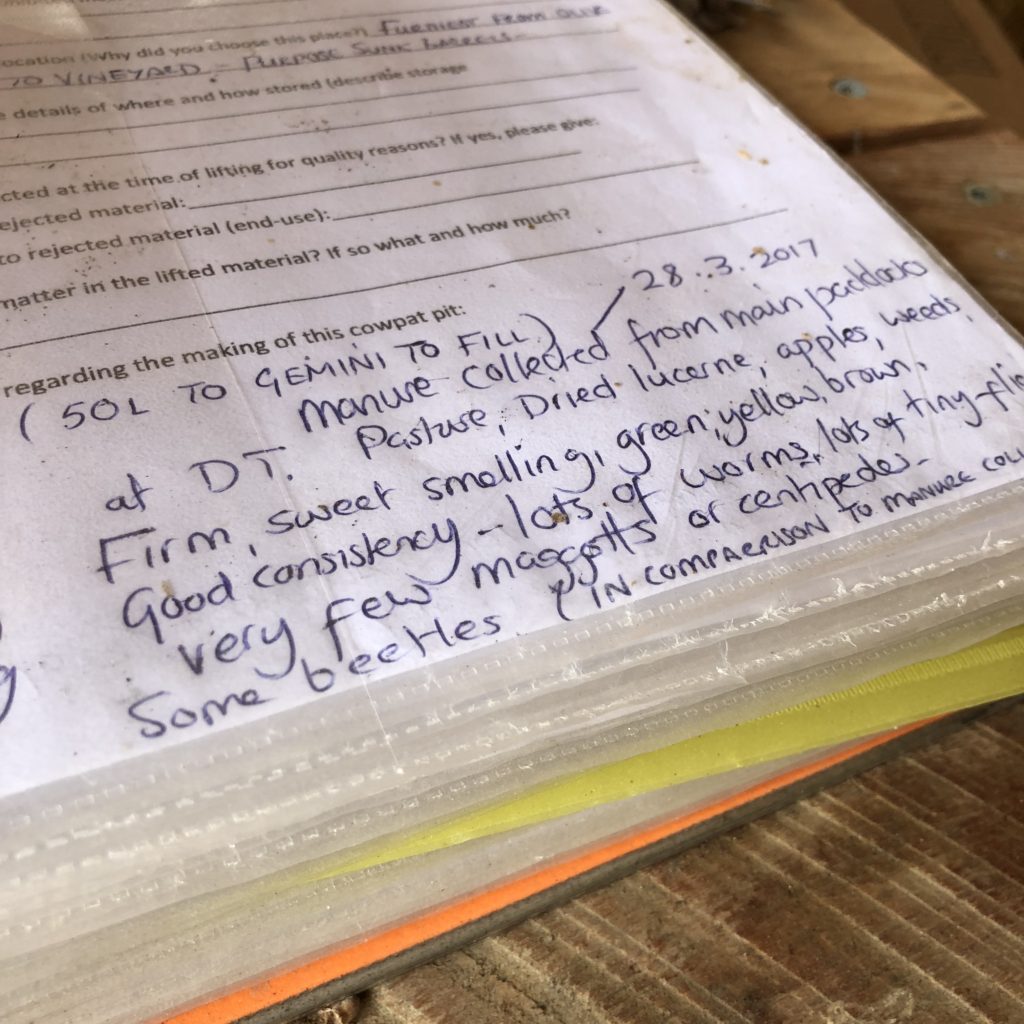
As I leave, I steal a glance at the cow pat pit ’tasting notes’ sitting on the worktop in the shed. It makes me wistful.
Always friendly, never pretentious, the Kiwis share an endearing down-to-earth trait and somehow I feel I’ve got closer to the earth, as a result. I’ve learnt a lot about sustainability, organics and biodynamics during my visit, but so much of it seems so simple. It’s charming. I’m smitten.
Stockists: some of the wines I have mentioned will be available in good independent wine shops, of which there are too few left (so support them!). There’s also thenewzelandcellar.co.uk for a brilliant range of the wines I have mentioned. The excellent thewinesociety.com have select Kumeu River wines and ‘The Society’s Exhibition New Zealand Chardonnay’ is made by Kumeu and is great value at £14.99. The Quartz Reef sparkling Brut is available from vintageroots.co.uk Villa Maria wines are very widely available, although it’s chiefly the Sauvignon Blancs in the supermarkets. Try Waitrose branches or waitrosecellar.com for the others and also for Craggy Range Syrah. Elephant Hill Syrah and Chardonnay are available from CorneyandBarrow.com For the Seresin wines, try etonvintners.co.uk